
The cabinet appears completely dead: there is no interior light, display response, fan sound, or cooling activity. The useful first step is to separate a normal operating condition from a repeatable fault before changing settings or ordering parts.
This is a no-power symptom, not a normal cooling complaint. Start with the electrical supply and user controls before treating it as a refrigeration-system failure. Work from the least invasive checks toward model-specific testing.
Before resetting the appliance, photograph the display and write down what changed: cabinet temperature, sound, water flow, lighting, control response, door behavior, or the time the symptom appears. Include any recent power outage, installation work, filter change, cleaning, large food load, or prolonged door opening.
Find the complete model and serial number. Liebherr uses different controls and component layouts across freestanding, built-in, Monolith, wine, and professional products. A button sequence, expected sound, or component name from another model may not apply to yours.
The order of likelihood changes with the model and the event that preceded the symptom. A problem that began immediately after moving the appliance should be approached differently from one that began after a power event or water-filter change.
After each correction, give the appliance enough time to show a meaningful trend. Temperature-sensitive contents should be protected according to their storage requirements; do not wait for a repair decision while food, wine, medicine, or laboratory material is outside its safe range.
Do not keep resetting a breaker, use an extension cord, or open electrical compartments. Avoid repeated power cycling, forcing mechanical parts, bypassing safety devices, or using undocumented service-menu commands. Those actions can erase useful history, create a leak or electrical hazard, and make the original fault harder to diagnose.
Arrange professional diagnosis when the outlet has power but the appliance remains blank, the breaker trips, the cord or plug is hot, or operation returns only intermittently. Stop using the appliance immediately if there is smoke, a burning smell, electrical heat damage, shock, repeated circuit protection trips, or uncontrolled water leakage.
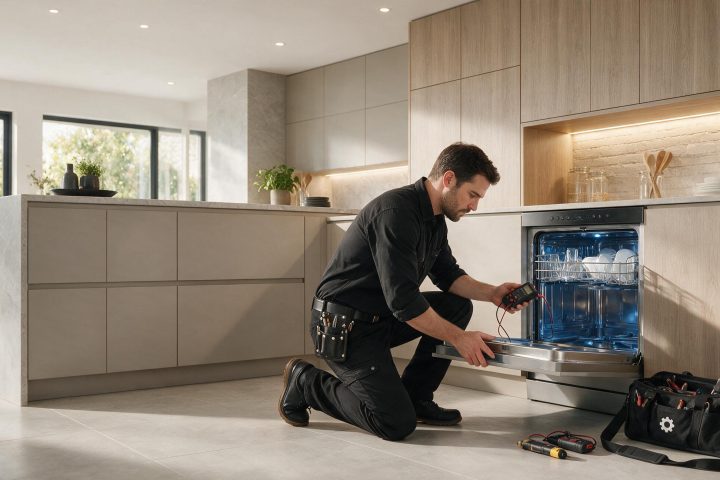
A technician will usually verify the reported symptom under current operating conditions, then compare inputs and outputs with the model-specific service information. That approach prevents an external condition or wiring issue from being mistaken for an expensive component failure. Provide the technician with the full model/serial information, photos of messages, measured temperatures, and the timeline of the symptom.
Monitoring is reasonable only when the appliance returns to normal after a clear external cause is corrected and the result remains stable. A reset that temporarily hides the symptom is not the same as a repair. Repeating alarms, worsening temperature, intermittent controls, leaks, and electrical symptoms deserve diagnosis even if the appliance restarts.
For integrated products, installation and cabinetry are part of the system. Door-panel alignment, ventilation area, water-line routing, and access to service components may need to be checked alongside the appliance itself.
Moisture forms on bottles, glass, walls, shelves, or around the door of a Liebherr wine cabinet. A clear diagnosis depends on when the symptom…
The wine cabinet door springs open, leaves a gasket gap, or no longer closes evenly against the frame. The symptom can have a simple…
An internal or cabinet fan seems to run most of the time, creating more sound or airflow than expected. The useful first step is…
Share a few details and we’ll confirm an appointment. Prefer to talk? Call us and we’ll help right away.
Use the secure scheduler below to request your appointment.